
Welcome to the 70–90 Club podcast. This is Laura Artman and today I’m talking about physical activity and how seniors can cut sedentary risks. Television, reading, meals, and long drives all happen in a chair, and those hours add up. But staying active can change the outcome.
A 2019 pooled analysis published in the British Journal of Sports Medicine, led by Ekelund and colleagues with Harvard Medical School and Harvard School of Public Health affiliations, explored whether the harm of sitting depends on how much physical activity a person gets.
Note that this analysis covered adults of all ages, so the findings describe adults broadly.
The researchers found that in the group with the lowest physical activity, more sitting time was linked to nine to thirty-two percent higher cardiovascular disease mortality, and more TV time was linked to three to fifty-nine percent higher cardiovascular disease mortality.
Longer sitting time was also linked to six to twenty-one percent higher cancer mortality. However, in the most active group, there was no increased cardiovascular disease mortality with more sedentary time.
Think of physical activity as a dial that turns the danger of sitting up or down. Here are seven proven ways to put these findings to work.
First, leave the bottom quartile behind. The risk was concentrated in the least active group, so the first goal is to move from nearly inactive to somewhat active.
Second, stand up every half hour. Standing, walking to another room, or doing a few chair stands every thirty minutes keeps long seated stretches from piling up.
Third, reclaim your television hour. Television time showed the widest range of increased cardiovascular disease risk. Stand during the show, march in place, use light hand weights, or pedal a small under-desk bike to turn passive time into useful time.
Fourth, walk short, walk often. Walking is the most accessible physical activity. Three ten-minute walks add up to thirty minutes and are easier to start than one long session. Try one after each meal.
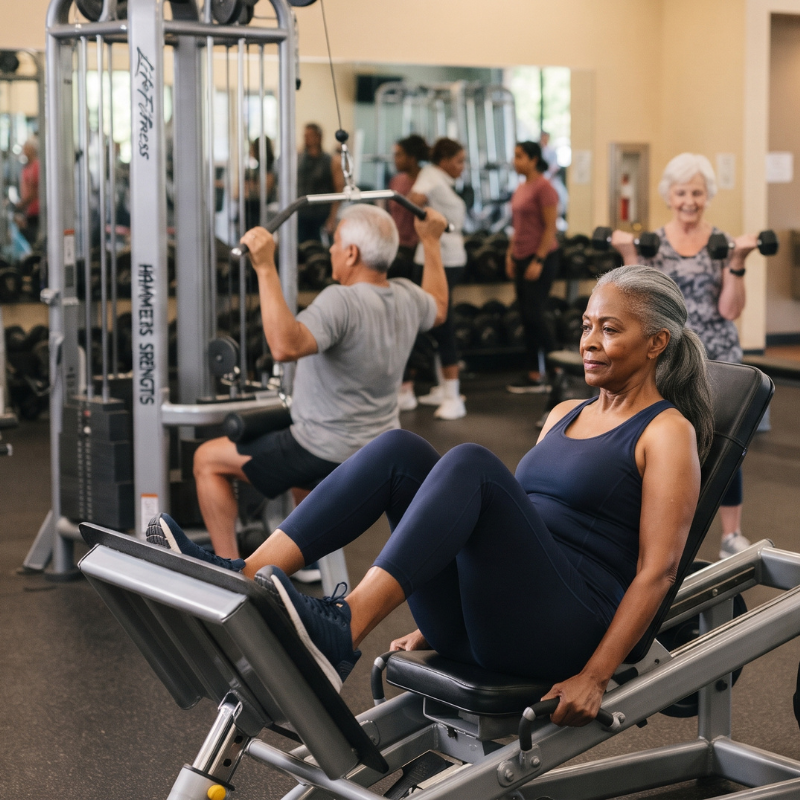
Fifth, build strength twice a week. Stronger legs make standing up, climbing stairs, and walking easier. Two weekly sessions can include chair stands, resistance-band rows, and wall push-ups.
Sixth, attach movement to habits you already have. Anchor physical activity to something you do every day, like stretching while the coffee brews or walking the block after lunch.
Seventh, track one number each week. Choose a single measure like total walking minutes, number of strength sessions, or number of long sitting stretches you interrupted to see if you are moving away from the least active group.
Sitting is not destiny. Move more, sit in shorter stretches, and make your television hour work for you.
Always talk with your doctor before starting any new exercise program, particularly if you have a chronic condition.
Thank you for listening. Join the conversation using hashtag 70-90-fitness. Contact Laura Artman Certified Personal Trainer to learn more. LauraArtman.com. once again that is LauraArtman.com.