

Table of Contents
Zumba: 7 Exciting Steps Toward Becoming a Licensed Instructor
I’m excited to announce that I am currently taking the Zumba® instructor licensing course and expect to complete the training by October 31. Once I complete the Zumba Basic 1 Instructor Training, I will be licensed to teach Zumba classes.
Zumba is a music-driven fitness program that combines dance-inspired movement with aerobic exercise. It brings together music, rhythm, choreography, and continuous movement to create a workout that feels different from a traditional exercise class.
I’ve always believed that fitness should include activities that people actually enjoy doing. Zumba brings music and movement together in a way that can make exercise energetic, social, and fun while still providing a meaningful workout.
How Zumba Was Created
The program has an unusual beginning. The program was created by Colombian dancer and choreographer Alberto “Beto” Pérez in the 1990s.
According to the story of it’s origins, Pérez arrived at one of his aerobics classes without the music he normally used. Rather than canceling the class, he improvised with music he had with him, including Latin music such as salsa and merengue.
The class took on a completely different feel. Instead of using conventional aerobics music, Pérez incorporated Latin rhythms and dance movements into the workout. The combination proved popular with participants.
That experience eventually became the foundation for Zumba. Pérez later partnered with Alberto Perlman and Alberto Aghion to develop the concept into a formal fitness program. What began with an improvised aerobics class eventually became an international fitness brand with instructors and classes around the world.
Today, the classes incorporate a variety of rhythms and dance-inspired movements. Zumba Basic 1 Instructor Training teaches instructors the foundation and formula for building a Zumba class, including four core rhythms: merengue, salsa, cumbia, and reggaeton. (Zumba)
What Makes Zumba Different?
Zumba doesn’t approach exercise like a traditional workout in which participants simply repeat a series of exercises. Music is an important part of the experience.
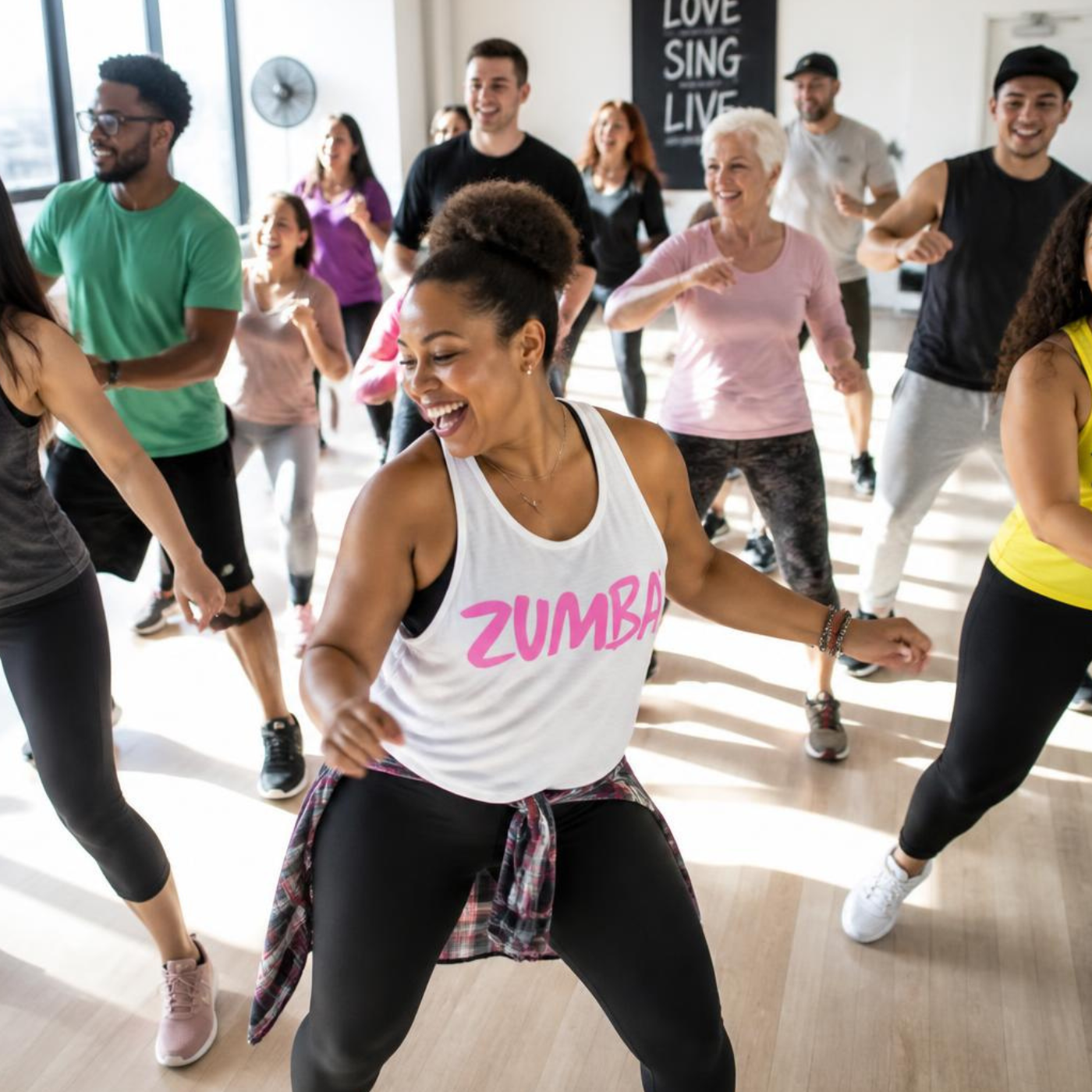
Participants follow rhythmic patterns and choreography while moving through different songs. The movements can include steps, turns, changes in direction, arm movements, squats, lunges, and other dance-inspired actions.
Because the music and movement change throughout the class, Zumba can provide variety within a single workout.
It also requires participants to coordinate movement with rhythm. Following choreography means listening to the music, watching or remembering movement patterns, and coordinating different parts of the body. That combination makes Zumba both a physical and mentally engaging activity.
Benefits of Zumba
The program can provide many of the benefits associated with aerobic exercise while offering a different way to achieve them.
One major benefit is cardiovascular conditioning. Continuous movement can raise the heart rate and provide an aerobic workout that contributes to cardiovascular endurance.
The program can also challenge muscular endurance. Repeated dance steps and bodyweight movements require muscles to work throughout the class. Depending on the choreography and intensity, movements such as squats, lunges, and directional changes can add additional muscular demands.
Coordination is another component. Participants are not simply moving from one exercise to another. They are attempting to match their movements to rhythm and choreography. This can challenge coordination, timing, body awareness, and movement control.
Other potential benefits include:
- Improved cardiovascular endurance
- Increased muscular endurance
- Greater coordination and body awareness
- Improved movement control
- Increased physical activity
- Calorie expenditure
- A fun alternative to conventional cardio workouts
- Exposure to different music and movement styles
- Variety within an overall fitness program
Zumba can also provide an opportunity to make exercise more enjoyable. That matters because consistency is an important part of any fitness program. A workout that someone looks forward to doing can be a welcome alternative to repetitive cardio equipment or conventional exercise routines.
Becoming an Instructor
I am currently working through the Zumba instructor licensing process and expect to complete my training by October 31.
The Basic 1 Instructor Training provides the foundation for teaching Zumba, including learning the basic rhythms, understanding the Zumba formula, learning how to apply movements to different parts of a song, and practicing how to build a class. Zumba states that instructors receive a license upon completing the training, with the initial license valid for six months.
I’m looking forward to putting that training into practice and adding Zumba to my fitness offerings.
Zumba brings together two things that can make exercise more enjoyable: music and movement. Whether you’re already a regular exerciser or simply looking for a different way to get moving, a dance-based workout can add variety and energy to your fitness routine.
More information about upcoming Zumba offerings will be announced after I complete my instructor licensing course.
Learn more at ArtmanStudios.com. | Read More here.
Zumba: 7 Exciting Steps Toward Becoming a Licensed Instructor
A quick overview of the topics covered in this article.
I’m excited to announce that I am currently taking the Zumba® instructor licensing course and expect to complete the training by October 31. Once I complete the Zumba Basic 1 Instructor Training, I will be licensed to teach Zumba classes.
Zumba is a music-driven fitness program that combines dance-inspired movement with aerobic exercise. It brings together music, rhythm, choreography, and continuous movement to create a workout that feels different from a traditional exercise class.
I’ve always believed that fitness should include activities that people actually enjoy doing. Zumba brings music and movement together in a way that can make exercise energetic, social, and fun while still providing a meaningful workout.
How Zumba Was Created
The program has an unusual beginning. The program was created by Colombian dancer and choreographer Alberto “Beto” Pérez in the 1990s.
According to the story of it’s origins, Pérez arrived at one of his aerobics classes without the music he normally used. Rather than canceling the class, he improvised with music he had with him, including Latin music such as salsa and merengue.
The class took on a completely different feel. Instead of using conventional aerobics music, Pérez incorporated Latin rhythms and dance movements into the workout. The combination proved popular with participants.
That experience eventually became the foundation for Zumba. Pérez later partnered with Alberto Perlman and Alberto Aghion to develop the concept into a formal fitness program. What began with an improvised aerobics class eventually became an international fitness brand with instructors and classes around the world.
Today, the classes incorporate a variety of rhythms and dance-inspired movements. Zumba Basic 1 Instructor Training teaches instructors the foundation and formula for building a Zumba class, including four core rhythms: merengue, salsa, cumbia, and reggaeton. (Zumba)
What Makes Zumba Different?
Zumba doesn’t approach exercise like a traditional workout in which participants simply repeat a series of exercises. Music is an important part of the experience.
Participants follow rhythmic patterns and choreography while moving through different songs. The movements can include steps, turns, changes in direction, arm movements, squats, lunges, and other dance-inspired actions.
Because the music and movement change throughout the class, Zumba can provide variety within a single workout.
It also requires participants to coordinate movement with rhythm. Following choreography means listening to the music, watching or remembering movement patterns, and coordinating different parts of the body. That combination makes Zumba both a physical and mentally engaging activity.
Benefits of Zumba
The program can provide many of the benefits associated with aerobic exercise while offering a different way to achieve them.
One major benefit is cardiovascular conditioning. Continuous movement can raise the heart rate and provide an aerobic workout that contributes to cardiovascular endurance.
The program can also challenge muscular endurance. Repeated dance steps and bodyweight movements require muscles to work throughout the class. Depending on the choreography and intensity, movements such as squats, lunges, and directional changes can add additional muscular demands.
Coordination is another component. Participants are not simply moving from one exercise to another. They are attempting to match their movements to rhythm and choreography. This can challenge coordination, timing, body awareness, and movement control.
Other potential benefits include:
- Improved cardiovascular endurance
- Increased muscular endurance
- Greater coordination and body awareness
- Improved movement control
- Increased physical activity
- Calorie expenditure
- A fun alternative to conventional cardio workouts
- Exposure to different music and movement styles
- Variety within an overall fitness program
Zumba can also provide an opportunity to make exercise more enjoyable. That matters because consistency is an important part of any fitness program. A workout that someone looks forward to doing can be a welcome alternative to repetitive cardio equipment or conventional exercise routines.
Becoming an Instructor
I am currently working through the Zumba instructor licensing process and expect to complete my training by October 31.
The Basic 1 Instructor Training provides the foundation for teaching Zumba, including learning the basic rhythms, understanding the Zumba formula, learning how to apply movements to different parts of a song, and practicing how to build a class. Zumba states that instructors receive a license upon completing the training, with the initial license valid for six months.
I’m looking forward to putting that training into practice and adding Zumba to my fitness offerings.
Zumba brings together two things that can make exercise more enjoyable: music and movement. Whether you’re already a regular exerciser or simply looking for a different way to get moving, a dance-based workout can add variety and energy to your fitness routine.
More information about upcoming Zumba offerings will be announced after I complete my instructor licensing course.
Learn more at ArtmanStudios.com. | Read More here.